If you’ve ever watched security footage get flagged for suspicious activity in real time, or seen a retail store adjust its layout based on customer movement patterns, that’s AI video analytics at work. Today, AI has become a necessity to make any business stand out and meet the expectations of its targeted audience. The technology, together with its subsets such as computer vision, machine learning, natural language processing, etc., renders innumerable benefits to help businesses provide exceptional and personalized services to their customers.
And the current most talked-about advantage is the integration of AI in video analytics. AI plays an important role in video surveillance, which is being actively used to maintain the security of private and public places. The technology helps in extracting manageable data and useful insights from videos to avoid emergencies, reduce damage, and identify risky situations beforehand. The use of artificial intelligence in surveillance video analytics can improve the complete security system.
Curious to know more about AI-based video analytics? You are in the right place. Here, we have highlighted everything you need to know before developing AI video analysis software, along with its applications. But before we mention the same, let’s check out what AI video analysis is.
What is AI Video Analytics?
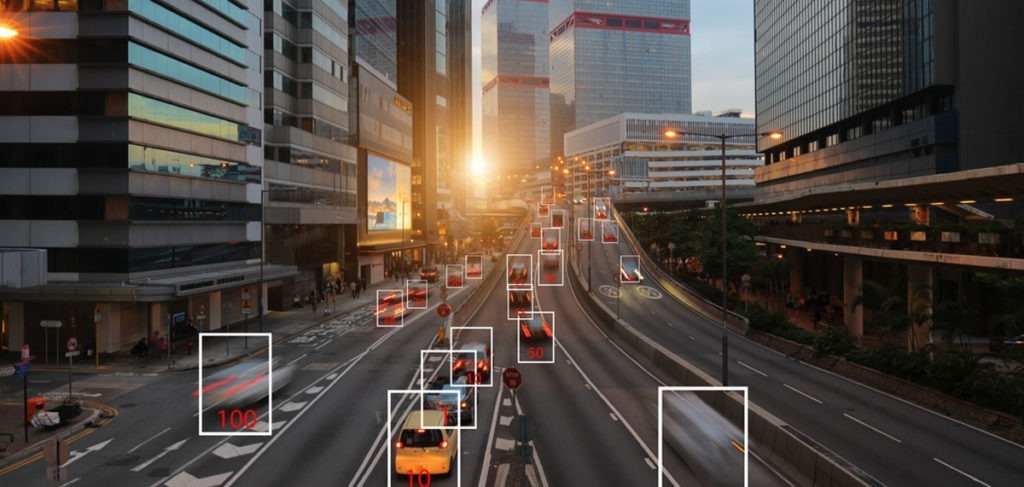
Also known as video content analysis or intelligent video analysis, surveillance video analytics is done to count the number of people at a place, identify numbers on the license plates, facilitate smart parking, perform facial recognition, and perform many other tasks.
Artificial intelligence makes the whole process of video analysis done automatically by machines, without any human intervention. The process can detect and alert immediately about various situations, such as the sudden appearance of smoke or flames, a person breaking traffic signals, a person behaving suspiciously in a public place, and more.
Numbers Behind the Growth of AI Video Analysis
Source: Fortune Business Insights
- In the year 2025, the global AI-based video analytics market reached about $12.29 billion.
- The highest share of AI-enabled video analytics was captured by North America, which was about 31.70%.
- Furthermore, the market is expected to unlock a value of about $14.81 billion in 2026.
- From base year 2026 to final year 2034, AI-powered video analytics is expected to reach an estimated value of $65.08 billion. The compound annual growth rate for this duration is 20.30%.
How is AI Video Analytics Different from Traditional Video Surveillance
Below is a table explaining the core differences between AI video analytics and traditional video surveillance:
| Aspect | Traditional Video Surveillance | AI Video Analytics |
| Core Function | Primarily records footage for later viewing | Automatically interprets video using computer vision algorithms |
| Technology Base | Relies on cameras, DVRs, and basic recording systems | Built on Machine Learning and deep learning models |
| Monitoring Approach | Requires manual monitoring or post-event review | Continuously analyzes video streams in real time |
| Operational Nature | Used reactively to review incidents after they happen | Detects and flags incidents proactively as they occur |
| Human Dependency | Heavily dependent on human operators | Minimizes human involvement through automation |
| Event Detection | Cannot identify events without manual observation | Automatically detects behaviors like intrusion, loitering, or object detection in video |
| Alert System | Alerts rely on human detection or external triggers | Generates instant, rule-based alerts for defined triggers |
| Accuracy | Accuracy varies based on human attention and fatigue | Delivers consistent accuracy with continuous learning and improvement |
| Response Time | Delayed response due to manual identification | Enables immediate response with real-time notifications |
| Data Utilization | Stores footage with little to no analytical use | Converts video into actionable insights and behavioral analytics |
| Scalability | Scaling requires more manpower and infrastructure | Easily scales across multiple locations with centralized intelligence |
| Processing Architecture | Primarily centralized processing with limited edge capability, leading to higher latency and bandwidth use | Supports edge and cloud processing for low latency, optimized bandwidth, and flexible cost control |
| Integration & Automation | Limited integration and no built-in automation | Integrates with IoT and automates workflows like alerts and reporting |
How Does AI Video Analysis Work?
AI video analytics software is synced with video capturing or video surveillance devices such as CCTV cameras. But how exactly does it function? That’s exactly what this section covers. The following steps explain how AI video analysis software solutions work:
- The process begins when AI-powered video analytics software collects the video content from the surveillance cameras.
- Once video feeds are captured, AI video recognition starts analyzing each and every feed in real-time.
- After analyzing the videos captured, the AI-enabled video analytics software compares the analyzed video feeds with the standards of normal and flags anything that it finds to be unusual.
- Once the AI video analyzer flags anomalies, it triggers alerts to notify the security personnel to take appropriate action. Apart from this, AI in security and monitoring can also automate safety responses like triggering alarms.
- Along with continuous surveillance, automated video analysis also stores the analyzed video feeds for future reference and provides insights for decision-making.
- Being powered by artificial intelligence, video analytics is also capable of learning over time from the analysis and responses it gives. Self-learning capabilities help it improve its anomaly detection accuracy.
Use Cases Of AI Video Analysis Solution
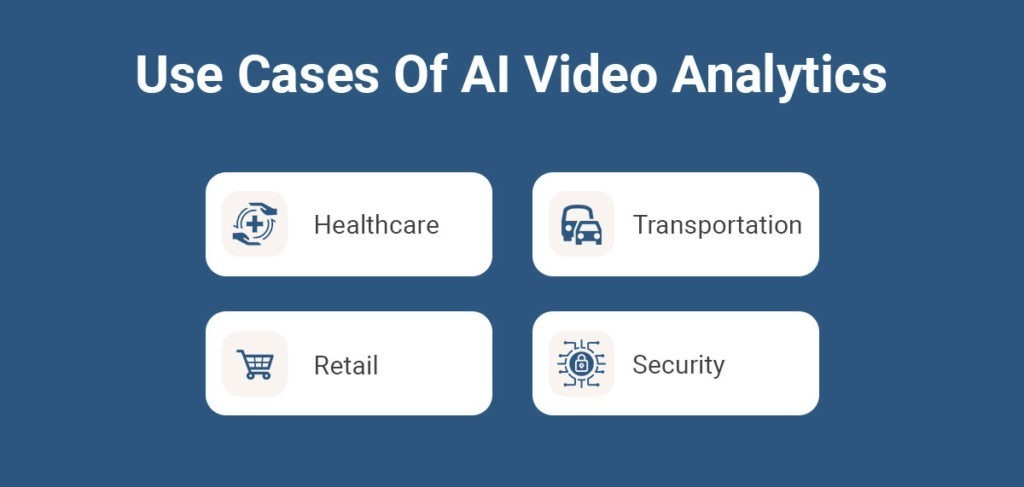
Healthcare
- Artificial intelligence video analytics ensures the safety of the doctors, patients, and visitors.
- Healthcare video analysis AI facilitates at-home monitoring of adults or kids.
- It evaluates patients by analyzing their facial expressions, body postures, and other behaviors.
Transportation
- Video analysis can help in managing traffic to avoid jams and accidents.
- AI video analytics software can detect dangerous situations in real-time to avoid collisions and other unwanted situations.
- Video analysis can be used for counting vehicles to make different traffic-related predictions.
- It can also be used for parking spot detection by analyzing the video captured using security cameras.
Retail
- Retail video analytics solutions can help in determining behavior and other key characteristics of the customers that can help in improving sales and managing inventory.
- AI video evaluation helps in tracking foot traffic in retail stores and helps in creating store layout accordingly.
Security
- AI-based video analysis utilizes facial recognition technology to help in facial recognition.
- AI for video analytics is also utilized for crowd management.
- Another use case of video analytics AI is that it helps in recognizing movement in prohibited or restricted areas.
Apart from these areas, AI video analytics can also be used in other industries, such as manufacturing, to monitor the production of products, the operation of various machinery, and for other purposes. It can also be used for face mask detection, smart access control, driver authentication, accessing smart home devices, and other tasks.
Our Work: Computer Vision Projects -AI-Based Solution to Track Marketing ROI
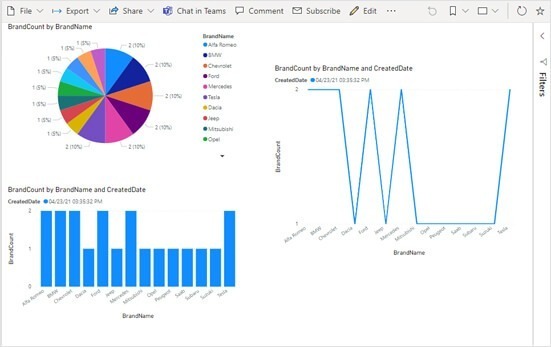
TunGo Project, where we created the API’s with the AI model to extract the human count, car count, car size, and human height from the video, which is captured by a van.
This project consists of step-by-step integration of different modules that consist of AI, ML, and Data Science.
The user would be able to see the real-time statistics and insights of the advertisement that is being displayed on the van, and also see the real-time location of the van. Read More
If you want an AI-enabled video analytics app, then contact a reputed and trusted AI solution development company. Make sure you have your particular app requirements ready to make the company’s professionals understand your business goals and vision. This would also help the project to move in the right direction. Choose a company wisely to get the best for your money.
AI-Enabled Video Analysis Implementation Challenges and Best Practices
While AI-enabled video analysis does help organizations transform their traditional surveillance to a smarter system, its implementation brings a fair share of challenges as well. Here are some of them:
Privacy Concerns Around Continuous Surveillance
Privacy concerns around continuous surveillance are one of the most common challenges organizations wanting to implement AI-based video analytics face. Unclear boundaries about footage access and management can create resistance towards intelligent surveillance implementation.
Best Practices:
Privacy concerns can be addressed by:
- Utilizing encryption and anonymization practices to keep identities hidden from unauthorized parties.
- Establishing clear boundaries and access management systems.
- Clearly communicate what is being captured and how it will be utilized and managed to build trust.
Regulatory Compliance Across Different Regions
Regulatory compliance is yet another implementation challenge that global organizations face, as they may find it difficult to comply with different regulatory requirements based on the region they are operating in.
Best Practices:
Regulatory compliance challenges can be overcome by:
- Understanding and applying specific regulatory laws as required in the deployment region.
- Conduct regular audits to ensure your intelligent video analytics software is updated with policy changes.
Risk of Bias in Facial Recognition and Behavior Detection
Another commonly faced challenge when implementing AI video analysis is the risk of bias in facial recognition and behavior detection. AI video analyzer trained on limited datasets may fail to detect faces and behavior effectively and can give inaccurate results.
Best Practices
Bias factors can be addressed by:
- Training AI video analyzer on diverse datasets to enhance its accuracy.
- Establishing human-in-the-loop to ensure that every output given is cross-checked before taking action.
High Integration Costs
While AI video analytics unlocks numerous benefits for organizations, its integration costs can conceal them, as it is quite a high upfront investment. It is a commonly faced challenge and can impact implementation decisions.
Best Practices:
High integration costs can be overcome by:
- Starting integration with a pilot project instead of a full-fledged integration across all departments.
- Leverage edge computing to reduce bandwidth and storage costs.
Final Words
This article is all about how artificial intelligence is used for video analysis, and how technology can bring useful data from a video that can improve surveillance and security. We have also provided simple definitions of the terms involved in AI video analytics so that you can understand every process in detail. After reading this article, if you want to develop AI video analytics software, then contact a video analytics software development company or hire AI developers.
While choosing an AI video analytics & CCTV security solutions development company, don’t forget to check its portfolio and clients’ feedback. Also, write down your particular software requirements beforehand to avoid any miscommunication between you and the company.

FAQs
Yes. AI video analytics is a software layer that can be integrated with the hardware cameras you already have, so there is no need for new hardware.
AI video analytics performs well in low-light and poor weather conditions if they are supported with good hardware like infrared CCTV cameras.
The core capabilities of intelligent video analysis are:
– Real-time object and people detection
– Face and license plate recognition
– Unusual behavior and anomaly detection
– Footfall counting and crowd analysis
– Automated alerts without manual monitoring
– Actionable insights from CCTV footage
The benefits of AI video analytics are:
– It enhances security with real-time threat detection
– Reduces costs by eliminating manual monitoring
– Improves decisions by turning footage into actionable insights
– Increases coverage across multiple camera feeds
– Minimizes false alarms through context-aware detection
– Strengthens outcomes across security, retail, and traffic
Yes, intelligent video analysis can learn and improve from the footage it processes over time. Machine learning video analysis processes each and every feed and learns from every output it gives to enhance accuracy.
