Imagine buying a shirt after being impressed by its fit on the model, only to get a reality check when you try it and look in the mirror. This isn’t a rare case scenario, but a reality for almost every other person.
And if you’ve been through such experiences, you know that they are not a one-time thing; they happen very often. These gaps in clothing expectation and reality do not just disappoint the customers, but also result in loss for organizations. But worry no more because, like any other problem, this one has a solution too, and it’s none other than a virtual clothes fitting app like MTailor.
MTailor is a digital tailor app that is powered by AI technologies like computer vision, machine learning, augmented reality, and cloud computing. The blend of these technologies helps the app in registering the user’s body type, identifying landmarks, and generating custom measurements, all while storing the data on the cloud.
This blog will tell you how to develop a virtual clothes fitting app like MTailor, covering every detail from how it works to statistical insights and the tech stack required.
Data & Insights Behind Virtual Clothes Fitting App Development
As per Fortune Business Insights,
-
The virtual fitting room market was valued at $6.86 billion in 2025.
-
In 2025, the largest share of the virtual fitting room market was held by North America, which was about 38.60%.
-
The report also states that the market is expected to reach 8.27 billion by the end of 2026.
-
The projected compound annual growth rate for the same is 17.70% from 2026 to 2034.
What is a Virtual Fitting Room App?
A virtual fitting room can be defined as an application built to help users try on clothes through their mobile devices. Such apps take a scan of the user’s body using their phone’s camera. Moreover, the clothes that users try in these fitting room apps are completely customizable, where customers are able to select the fabric used, pattern, collar, length, and button placement, and place orders for the same.
Body measurement app for clothing captures a user’s measurements in mere seconds, and the measurement data is then translated across multiple product lines and used to create custom-fitting garments. This Virtual Fitting App does customization accordingly for men and women of any height, weight, or body type. The core technology that powers virtual fitting apps includes AI/ML, augmented reality, computer vision, Cloud Storage, and 3D modeling tools
The technology used is actually quite candid. In virtual fashion apps, once the device determines its distance and angle relative to the subject is helpful as measurements are relatively easy to obtain. Leveraging a complex learning algorithm, the device’s camera feed translates imagery into measurements. After that, the app then makes note of several key measurements, which are applied to a garment pattern.
The resulting output is a “custom-made clothing item with a perfect fit according to the user’s requirement”.
The technology used is actually quite candid. Once the device determines its distance and angle relative to the subject is helpful as measurements are relatively easy to obtain. Leveraging a complex learning algorithm, the device’s camera feed translates imagery into measurements. After that, the app then makes note of several key measurements, which are applied to a garment pattern.
The resulting output is a “custom-made clothing item with a perfect fit according to the user requirement”.
How does the MTailor app work?
Here’s a dedicated section explaining how the MTailor app works:
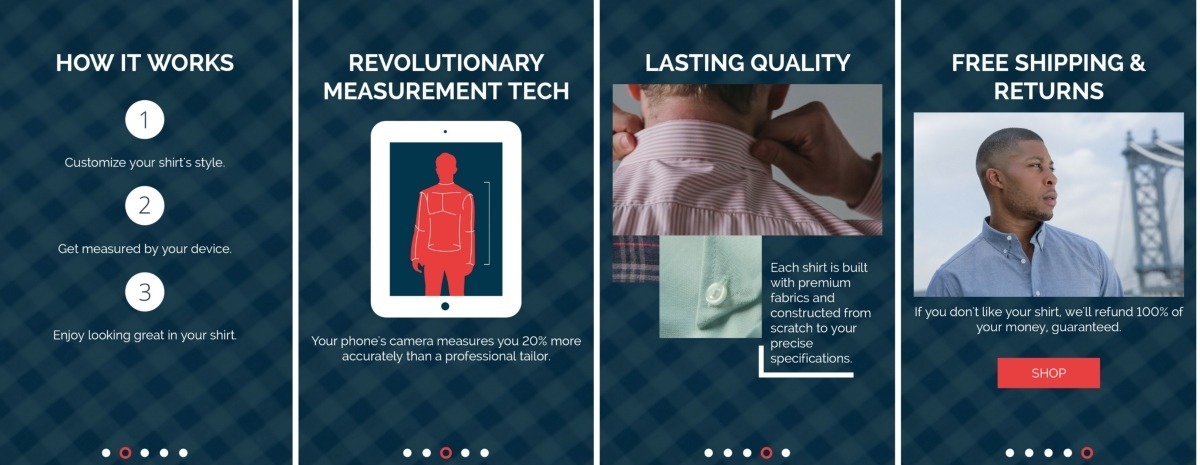
-
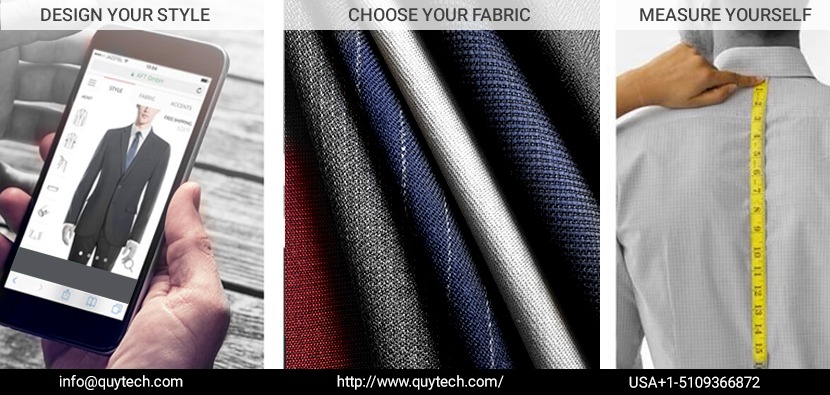
Styling
Virtual clothes fitting app like MTailor offers a simple user interface that can be used for bespoke clothing requirements. It is an augmented reality-based interactive platform. It can be used in an offline and online tailor store that definitely helps a user to select Cuffs, Collars, Plackets, Lapels, fits, and a lot more.
This feature is used for viewing the garment instantly. Thus, the configurator enables combining the selected elements and visualized in a made-to-measure outfit of your choice.
-
Select Fabrics
When it comes to fabric or stuff, they are categorized, and the variation is used for users. Apart from that, there are options in this app that are made-to-measure suits, shirts, and other formal ensembles that can be beneficial for the users. To make it feel good, there is a customization tool that is used to select among stored varieties such as checks, stripes, and structures. Therefore, to view the selected fabric instantly, this app is built to map the final visualization on the online tailor store.
-
Customization
What can be better than a fully customizable tailoring software? This enables the user to get the right fit and look with the simple click of a mouse.
The measurement is the basic fundamental requirement for the process to move forward. Thus, a Virtual Tailor App like Mtailor is a tailoring measurement software that is just the right solution for any company in the respective sector.
With such an App, the user can customize and use the “made-to-measure” feature to choose suits, shirts, and a wide variety of formal wear.
-
Bespoke Suits
This is the new way of e-commerce where online tailor stores combine the configurator, measurement module, and payment gateway. Thus, with the help of technology, bespoke clothing is back in fashion. With the Virtual Tailor App, we can create a unique made-to-measure ensemble of suits, trousers, jackets, and a lot more. This app provides a much more comprehensive design library of designs, features, styles, and fitting options.
MTailor is an online 3D design engine that provides an original online bespoke clothing app experience to the user. Consumers today are gaining profit with this App.
Read More: Know more about Virtual try on solutions, Like Glasses, watches, jewelry
Key Features of a Virtual Fitting App like MTailor
The key features of a virtual fashion app like MTailor are:
1. AI-Based Body Measurement
As mentioned already, the MTailor app is powered by artificial intelligence. This allows it to measure the size of a user’s clothing with an accuracy of more than 20%. Naturally, an app like MTailor also works like a clothes measurement app, assisting tailors digitally.
2. AR Clothing Try-On
Now, apart from assisting tailors, developing a virtual clothes fitting app like MTailor helps users try on different clothes from the comfort of their homes. A real-time AR clothing try-on app like MTailor allows users to visualize outfits better, as it uses augmented reality for clothing try-on.
3. Virtual Closet / Measurement Storage
Being one of the best apps for clothing measurements, the MTailor clone app does more than merely measuring. It can also store every measurement it takes as it is cloud-based and acts as a free measurement storage app for tailors. And not just for tailors, but it also helps users store tailored measurements online,
4. 3D Avatar Creation
Apart from the above-mentioned core features, clothing measurement apps like MTailor also create personalized 3D avatars of users. These avatars are made up of the landmarks of the actual bodies of users. Naturally improving virtual outfits’ fitting accuracy.
5. Custom Tailoring Integration
As the name makes it quite clear, the MTailor clone brings another feature that acts as an app for tailoring clothes. Based on the measurements it takes of the users, it allows them to choose any clothing of their choice and get it custom-made for themselves. This way, users get to shop online without worrying about ill-fitting clothes.
6. Product Recommendations
Last but not least, a body measurement app for clothing like MTailor also provides users with product recommendations. Having the measurement data stored, such apps identify the body types of the users and give them recommendations for styles and fabrics that suit their dynamics.
How to Develop a Virtual Clothes Fitting App Like MTailor
While clothing measurement apps like MTailor bring amazing features, their development might look a bit challenging. But worry not, because we will guide you through the development process. The following are the steps of developing a suit measurement app like MTailor:
-
Market Research and Scope Definition
Every app development process begins with market research, so you also need to start from there. Here, you will define:
- Your target audience
- Your price points
- Platforms you plan to target
- Features you want to include in your app, and so on.
-
Design the Interface
Once market research is conducted, start designing your interface. Since you have already listed what you want in your app, the screens you need to develop become easy to figure out. The point to highlight here is to make sure that you keep the UI/UX simple and intuitive.
-
Finalize the Tech Stack
Here’s a table that’ll help you pick the right technology for your app like MTailor:
| Component | Technology |
| Frontend (Mobile App) | Flutter / React Native |
| Backend Server | Node.js / Python (Django / FastAPI) |
| Computer Vision Engine | OpenCV |
| Pose Estimation | MediaPipe |
| Machine Learning Framework | TensorFlow / PyTorch |
| Cloud Platform | AWS / Google Cloud Platform |
| Database | PostgreSQL / MongoDB |
| Storage (Media Files) | AWS S3 / Google Cloud Storage |
| API Communication | REST APIs / GraphQL |
| Authentication | Firebase Auth / OAuth 2.0 |
| Payment Integration | Stripe / Razorpay |
| AR Integration (Optional) | ARKit / ARCore |
| DevOps & CI/CD | Docker / Kubernetes / GitHub Actions |
| Analytics & Monitoring | Firebase Analytics / Google Analytics |
-
Develop the AI-Based Measurement System
After finalizing the tech stack comes the most important step of all: Developing the AI-based measurement system. Here, the core functionality of adding technologies will be trained with data collected to ensure that every scanning, analysis, and recommendation MTailor gives is accurate.
-
Develop the Backend and Integrate Features
Once the AI-based measurement system is developed, start building the backend and integrating features. The backend areas power the core operations of the app, so ensure you make it robust. Integrate authentication systems, AI engines, E-commerce, and order management, etc.
-
Connect the Frontend and Backend
After the backend is developed and integration is successful, start connecting the dots. Connect the backend architecture with the frontend to complete the development of a body measurement app for clothing.
-
Test, Deploy, and Improve
Once the augmented reality clothing fitting app is developed, start testing it. Ensure that you test everything from regression to edge cases. After the AR clothes fitting app meets all the set requirements, deploy it and improve it regularly to keep it updated.
What are the Benefits of Augmented Reality Clothing Apps like MTailor
An augmented reality clothing fitting app like MTailor brings in numerous benefits like improved customer experience, reduced returns, better conversion rates, and a lot more. Here’s a dedicated explanation of these benefits:
-
Improved Customer Experience
Suit measuring apps like MTailor allow users to visualize themselves in multiple fabrics and styles. Virtual fit tech like this helps users try on outfits before buying them from the comfort of their space. This naturally enhances customer experience as they don’t have to put a lot of effort into accessing quality clothing.
-
Reduced Returns and Exchanges
A tailor body-measurement app like MTailor helps deliver bespoke clothing with 20% more accuracy than human tailors. This means that the clothes users get fit not just their bodies but also their expectations, reducing the chances of returns and exchanges.
-
Increased Conversion Rates
Virtual wear apps benefit organizations by increasing conversion rates. How so? Well, being powered by artificial intelligence, MTailor provides users with not just a clothes measuring app for free but also helps them get clothing tailored to their body size and type. This increases the satisfaction users
-
Data-Driven Personalization
AR fitting apps like MTailor provide users with data-driven personalization. Such apps understand the body type, suitable styles, and preferences of the users, and then, based on them, it gives personalized recommendations for fabric, sizes, material, etc.
-
Competitive Advantage
From a business point of view, virtual fitting software like MTailor provides organizations with a distinct competitive advantage. This is because it helps them in understanding what their customers want and cater to their needs precisely, naturally improving their position in the market.
Challenges and Best Practices for Developing an AI Clothes Fitting App like MTailor
Developing an app like MTailor brings its fair share of development challenges as well. But with the right set of best practices, organizations can overcome these challenges and bring their clothes fitting app vision to life. Here are some challenges along with best practices:
Lack of Measurement Accuracy
A very common challenge that online clothes fitting technology brings is a lack of measurement accuracy. Such problems often arise because of different camera angles, lighting, loose-fitting clothes, etc.
Best Practices
Measurement accuracy challenges can be overcome by providing clear instructions to users for lighting, posture, distance, and the type of clothing to wear during virtual outfit fitting to get accurate measurements.
Unavailability of Quality Data
Online clothes fitting technology apps are powered by artificial intelligence. And AI models need quality data for training to give real-time and accurate measurements and clothing recommendations to users. Unavailability of quality data can result in inaccuracies and biased recommendations to users.
Best Practices
To overcome this challenge, organizations should utilize diverse training datasets. This not only eliminates bias but also enhances the performance of AI models.
Lack of Data Privacy and Security
Since AI models in virtual outfit apps like MTailor capture user data, like their credentials, try-on data, etc. It naturally gives rise to data privacy and security concerns. It creates skepticism in the minds of users as they may doubt if their data is safe.
Best Practices
To overcome data security challenges, organizations should follow these practices:
- Encryption of data
- Access controls
- Anonymization techniques implementation
The Scope of This App – Mtailor
MTailor, a Virtual fitting app, transforms your personal computer into a sophisticated online tailor store. With completely customizable features, users can be a trendsetter with made-to-measure options.
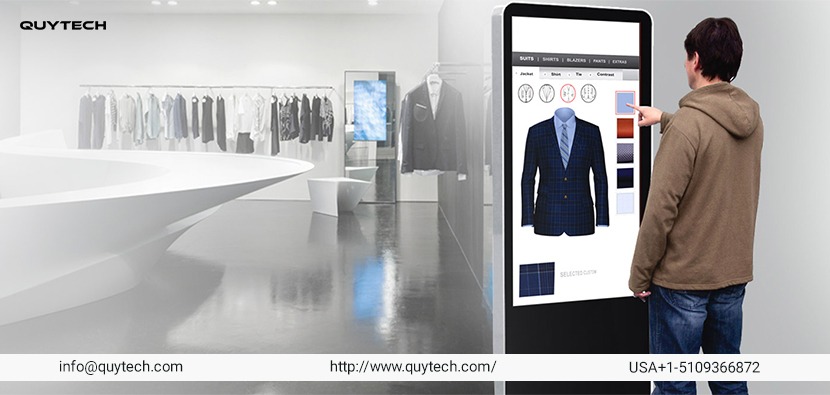
Therefore, the user can bring out a distinctive fashion quotient and style apparel.
- Place tailoring orders and get your custom-made outfit without stepping into a shop.
- Custom tailor with 3D design, tailor engine with a comprehensive design feature database for a variety of suits
- It results in excellent sales that are exclusive, safe, and hassle-free, and uses marketing tools such as SEO and viral marketing.
- No extra plug-ins uploaded on your web server.
- Design your garment yourself interactively and choose your own styles on the online tailor store.
- Option to personalize monogram with customized fonts and text.
- 3D image of a tailored suit being developed in real time.
- The step-by-step guide to body measuring or pick up a standard size.
- Simply choose from previously saved personal measurements for a timely finish requirement.
Wrapping up
With time, it’s clear that augmented reality apps are changing the way consumers shop online. Augmented Reality technology is expected to be a major game-changer for e-commerce companies.

Virtual clothing fitting apps like Mtailor are built to develop more competition, hence theyengages the users with the ability to offer more options in terms of customization and personalization. You can look no further and contact us.
Here we have vast experience and experts in Augmented Reality App development. Quytech helps clients to get things done in an effective way. Nothing tells more about a company than what its clients say. To believe it, check our portfolio.
FAQs
What technologies are used in AR clothes fitting apps?
The core technologies used for developing an AR clothes fitting app include:
- Augmented reality
- 3D modeling
Can virtual tailor apps like MTailor be used to make clothes online?
Yes, virtual apps like MTailor allow users to select the type of fabric, style of clothing, and so on, and get bespoke clothing online.
Are virtual clothes fitting apps free to use?
Most virtual clothes fitting apps offer a freemium model where they offer some free-to-use features and charge for premium ones.
What are the key features of the best virtual fashion app?
The key features of the best virtual fashion app are:
- AI-based body measurement
- AR clothing try on
- Virtual measurement storage
- 3D avatar creation
- Custom tailoring integration
- Product recommendations
What expertise is needed to build an AI clothes-fitting app like MTailor?
Apart from fashion and tailoring expertise, the core technical capabilities required to build an app like MTailor include:
- Artificial Intelligence & Machine Learning
- Computer Vision
- Augmented Reality Development
- 3D Modeling & Simulation
- Mobile App Development
- Backend & Cloud Infrastructure
- UI/UX Design
