Summary:
Telemedicine apps have completely transformed healthcare accessibility. Traditionally, connecting with doctors, renewing prescriptions, or reviewing lab results was something that needed the patient to go to clinics and hospitals. But telemedicine app development has completely changed the game.
These apps allow users to access healthcare facilities from the comfort of their homes. Not only does it benefit patients, but it also helps healthcare facilities and doctors in connecting with patients and managing their health records digitally. A well-built telemedicine app does more than digitize appointments; it widens access to care, cuts wait times, and lets patients connect with the right doctor from anywhere.
Telemedicine apps are mobile applications that are used to access healthcare consultations and services remotely. Telemedicine mobile applications are gaining popularity, as nowadays most people have hectic schedules and do not have enough time to visit doctors.
They use telemedicine applications to consult and seek medical assistance from the comfort of their own place.
And as telemedicine mobile applications gain rapid traction, the demand for telemedicine mobile app development is set to grow significantly. Hence, it will be a profitable business to develop a telehealth app to provide remote health consultations and medical assistance to users.
In this blog, we have provided the complete guide for telemedicine app development. We have covered everything from the development process to top-notch features to enhance user experience, and a clear roadmap of how to build a telemedicine app. So without any more delay, let’s start!
Telemedicine Mobile Applications:
Statistics You Should Know in 2026
Source: Fortune Business Insights
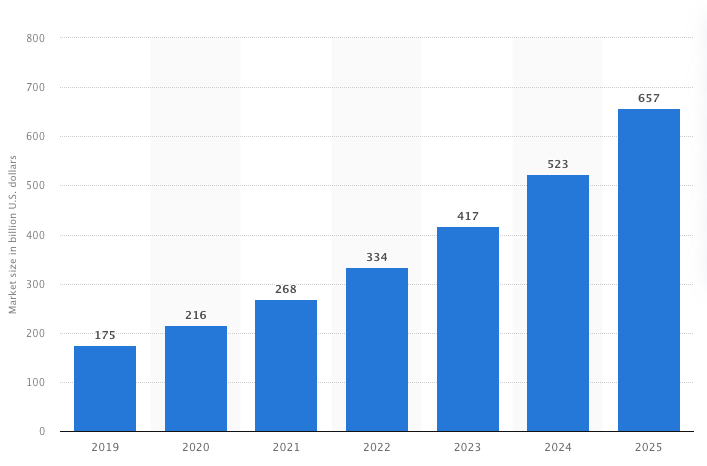
- The global Telemedicine market stood at a value of $113.04 billion in 2025.
- The report also states that the market is estimated to reach $123.39 billion by the end of 2026.
- The CAGR from 2026 to 2034 is anticipated to be 17.27%.
- Region-wise, the highest share in the global telemedicine market was captured by North America, at about 48.04%.
How Does the Telemedicine App Work?
Telemedicine apps follow strict and approved algorithms to accurately examine and evaluate a patient.
First, users set up an account and log in using a password or biometric authentication.
From the homepage, they choose telemedicine services, such as consultations, diagnosis, booking lab tests, and more.
Users pay for the consultation and other fees through a secure payment gateway in the telemedicine app.
After payment, they access the services. Moreover, they can also check their past details from the “History” dashboard. A
Also, the telemedicine app allows users to store important information, such as prescriptions and lab reports, in a highly secure digital vault, ensuring privacy and accessibility whenever needed.
Now, let’s learn how to develop a telemedicine app.
Essential & Advanced Features in
Telemedicine App Development
Before jumping directly into the development process, here’s a comparison table that will guide you through the essential and advanced telemedicine app features:
| Feature Area | Essential Features (MVP) | Advanced Features |
| User Onboarding | User registration & secure login | Biometric login, voice assistant support, multi-language support |
| Appointment Management | Appointment booking & calendar sync | AI-powered smart scheduling & automated reminders |
| Consultation | Video consultation & chat messaging | AI health assistant for virtual healthcare guidance |
| Symptom Assessment | Basic intake forms | AI symptom checker for pre-consultation triage |
| Patient Records | Medical history & digital prescriptions | EHR/EMR integration, blockchain records, secure medical file sharing |
| Remote Monitoring | Manual vitals entry | Remote patient monitoring via IoT wearable integration |
| Payments | Payment gateway integration | Multi-currency & cryptocurrency payments |
| Notifications | Push notifications | AI-personalized health alerts & smart reminders |
| Accessibility | Multi-device compatibility | Cloud-based telemedicine platform with API & SDK integration |
| Security & Compliance | TLS/SSL encryption, HIPAA compliance | Blockchain-secured data, enterprise-grade access controls |
Step-By-Step Guide for Telemedicine App Development
The following is a step-by-step guide for developing a telemedicine app:
Step #1. Market Research
The first step is to research the market and analyze various telemedicine mobile apps to understand how they work, their unique selling points, and weak points.
Also, understand necessary compliance and regulation requirements such as HIPAA (Health Insurance Portability and Accountability Act). Market research will significantly help you with custom telemedicine app development.
Step #2. Determine the Requirements
The next step is to determine the requirements for the telehealth app development.
This includes the type of platform – Android, iOS, or cross-platform. Also, you must decide the features and functionalities you want to integrate into the telemedicine mobile application.
Step #3. Design the UI/UX
Begin designing the user interface for the telemedicine application. Hiring a leading telemedicine app development services provider is suggested to develop your application.
It is crucial to create an intuitive user interface to engage and retain users. Use the right colors, layouts, and fonts to develop the UI of the telemedicine mobile app.
Step #4. Develop the Telemedicine Application
After designing the UI, develop the telemedicine app by coding the backend. Use API integration for telemedicine to empower the app with top-notch features.
Also, implement advanced security measures to protect sensitive user data from unauthorized access and potential hacking.
Step #5. Testing and Quality Assurance
Post development, test the telemedicine app to ensure it is working properly. Identify and fix the bugs if there are any.
Use the app on various platforms and devices to ensure a uniform user experience.
Step #6. Deploy the App
Once testing is done, deploy the telemedicine app on the Google Play Store and App Store. Market the app using various strategies, such as app store optimization, SEO, influencer marketing, collaboration, etc., to educate more people about the app and increase the overall user base.
Thus, this is the telemedicine mobile app development process.
List of Crucial Features of a Telemedicine Mobile App
Below are the crucial telemedicine app features to integrate into the telemedicine applications:
Features for Patients
- Easy register and log-in process.
- User-friendly dashboard
- Easy access to telemedicine services
- Scheduling appointments
- Audio-video calls
- Various secured payment options
- Chatbot for customer support
- Ratings and reviews
Features for Healthcare Services Providers
- Easy registration
- Calendar for appointments
- Access appointment lists
- Audio and video call options
- Access to past patient records
- Payment gateways to receive payments
Features for Admin Panel
- Manage patients and healthcare service providers
- Access and analyze sales reports
- Check appointments (completed, upcoming, and canceled)
Therefore, these are the necessary telemedicine software features to integrate within a telemedicine mobile application.
Technology Stack for Telemedicine App Development
The following is the suggested technology stack for telemedicine application development.
| Component | Technology Stack |
| Frontend Development | React Native, Flutter, or Native (iOS/Android) |
| Backend Development | Node.js, Python (Django or Flask), Ruby on Rails |
| Database | MongoDB, PostgreSQL, MySQL |
| Real-time Communication | WebRTC, Twilio, Agora.io |
| Authentication | OAuth 2.0, JWT |
| Hosting | AWS, Google Cloud Platform, Microsoft Azure |
| Push Notifications | Firebase Cloud Messaging, Twilio Notify |
| API Integration | RESTful APIs, GraphQL |
| Video Conferencing | Zoom SDK, TokBox |
| Messaging | Twilio, Firebase Cloud Messaging |
| Analytics | Google Analytics, Mixpanel |
| Security | TLS/SSL, Encryption, HIPAA Compliance |
| AI Integration | OpenAI, Gemini, Claude |
| Cloud Storage | AWS S3, Azure Blob Storage |
| DevOps | Docker, Kubernetes, GitHub Actions |
So, this is the recommended technology stack to develop a telemedicine mobile app. Please note that it is a recommendation; you can use other tech tools for custom telemedicine app development tailored to your specific needs. use other tech tools to develop the telemedicine app tailored to your specific needs.
Emerging Technologies to Leverage in Telemedicine Apps
Here are the emerging technologies to use in telemedicine apps to empower them and enhance the user experience.
1. Artificial Intelligence

The first advanced technology used in telemedicine apps is AI, which enhances the user experience. AI automates the functionality of the app, recommends services by analyzing the user’s requirements, and is used in chatbots (generative AI) to automate customer support.
2. Virtual Reality
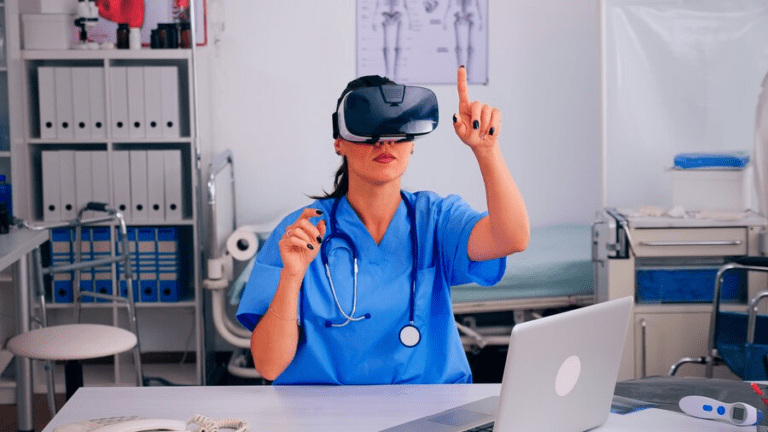
Virtual reality is another emerging technology to leverage in telemedicine application development.
VR-powered telemedicine apps enhance the consultation experience significantly and allow doctors to examine patients better.
Users can also benefit from consultations in virtual reality, as it helps them describe their problems better, unlike during an audio or video call.
3. Blockchain

Blockchain is popular for the security and transparency it offers. Thus, leveraging blockchain technology during telehealth mobile app development can allow users to store their medical records securely.
Also, authorized doctors and other healthcare service providers can access the healthcare records of patients easily, thanks to blockchain technology.
Moreover, blockchain also provides users with an additional mode of payment, that is, cryptocurrencies, for the services they opt for in the telemedicine app.
Therefore, these are the top emerging technologies that can enhance the functionalities of the telemedicine app.
4. Internet of Things
The Internet of Things can easily connect medical wearables with the telemedicine app.
By integrating IoT technology into telemedicine apps, doctors can gather health data from the wearables worn by the patient in real time. Using this data, they can enhance patient care.
So, these are the top emerging technologies to integrate during telemedicine app development.

Benefits of Developing a Telemedicine Mobile Application
There are numerous benefits of building a telemedicine mobile app. The top ones are mentioned below:
1. Convenience
The top benefit of developing a telemedicine app is the convenience it provides. Users can easily connect with leading doctors and healthcare professionals via telemedicine apps, from the comfort of their homes.
2. Access to the Best Healthcare Services
Telemedicine mobile applications offer a range of healthcare services to users. Hence, by developing telemedicine apps, you can provide your users with access to the best healthcare services remotely.
3. Widen Reach
With telemedicine apps, people who are living in remote areas or cannot reach out to hospitals can easily seek medical assistance from doctors beyond boundaries.
A patient in a village in the USA can seek medical help from a top doctor living in Japan.
4. Remote Monitoring
Remote patient care application development enables doctors and healthcare professionals to take care of their patients remotely. They can monitor patients 24/7 and check vital health signs using the telemedicine app.
5. Income Stream
Developing a telemedicine app can create an income stream for you. If you are a doctor, you can render your services and generate income.
If you are a third-party service provider, you can charge a commission from the doctors you onboard in your telemedicine app.
Therefore, these are the top benefits of developing a telemedicine mobile app.
Common Challenges that Arise During Telemedicine App Development
The following are some common challenges that arise during the development of the telemedicine app.
1. Regulatory Compliance
The common challenge that arises during the development of telemedicine apps is regulatory compliance.
The telemedicine app must adhere to various regulations and standards like HIPAA and GDPR to ensure a high level of privacy and security for patient data.
2. Intuitive User Interface
Another challenge for developing a successful telemedicine app is creating intuitive user interfaces.
The user interface must offer a uniform user experience on different devices, screen sizes, and platforms. Moreover, the UI must be well-organized to enhance the user experience of the telemedicine apps.
3. Integration with Healthcare Systems
A major challenge in telemedicine app development for hospitals and clinics is integration with the healthcare systems.
Telemedicine apps must be compatible for integration with existing electronic health record (EHR) systems, databases, and other healthcare IT systems so that doctors and other medical experts can easily access patient data.
4. User Authentication and Security
Healthcare data is highly vulnerable to cyberattacks and hacking. Cyber threats are a major challenge for building a telemedicine app.
Hence, you must implement cutting-edge and reliable security measures to enhance user authentication and health data security.
5. Scalability and Performance Optimization
Last but not least, telemedicine app development also needs to deal with scalability and performance-related challenges.
As your telemedicine app gains more users, you need to build an infrastructure to store more user information without compromising performance or reliability.
Hence, these are some of the challenges that you may face while developing a telemedicine app.

Top Telemedicine Mobile Applications
The following are some of the top telemedicine mobile applications:
1. Doctor on Demand
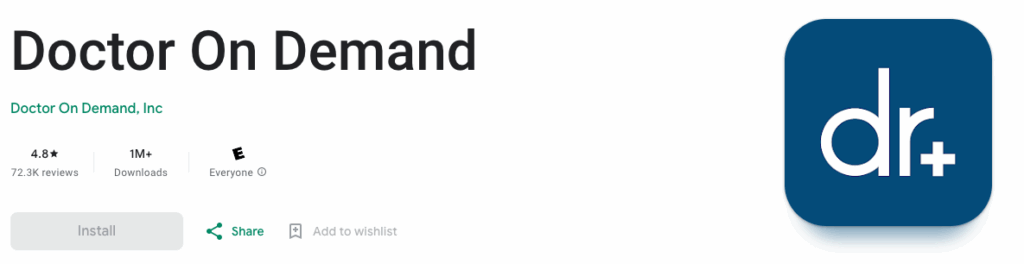
The Doctor on Demand app is one of the most popular telemedicine applications. The app offers healthcare experts 24/7, lab-related services, prescriptions for medications, treatment for acute and chronic diseases, and more.
2. MDLive
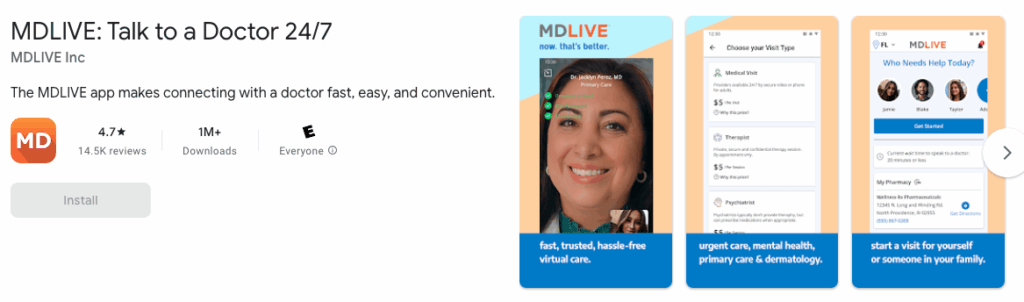
MDLive is another well-known telemedicine app with over 1 million downloads. The application offers services for online consultations, short-term prescription refills, treatment for 50+ nonemergency conditions, mental health-related treatments, and dermatology services.
3. TelaDoc
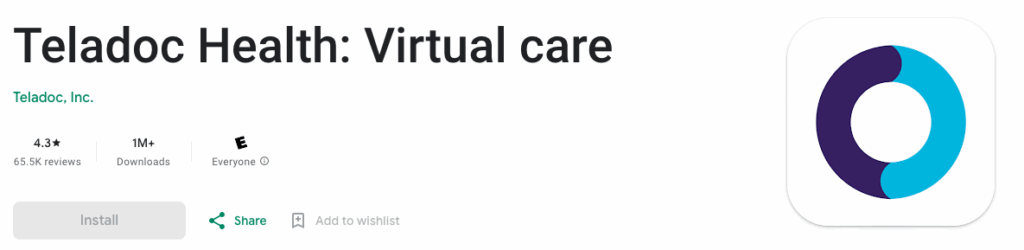
TelaDoc application is also a very popular telemedicine mobile app. It offers 24/7 online consultations, medicine delivery from nearby pharmacies, medical treatment services for acute issues, and more. The app has over 1M+ downloads.
Concluding Thoughts
Telemedicine apps are one of the innovations that are transforming the healthcare industry and enhancing patient care. These apps connect patients with doctors and allow them to access the best healthcare services from the comfort of their homes.
In recent years, the demand for telemedicine apps has been increasing. Therefore, it will be profitable to develop a telemedicine app that addresses patients’ issues.
So, if you are interested in building a telemedicine app tailored to your unique requirements, contact our team today. We are the top telemedicine app development company and a trusted telemedicine app development services provider, developing healthcare apps and custom telemedicine solutions for hospitals, clinics, medical facilities, and other businesses associated with the healthcare industry.
Key Takeaways:
- A telemedicine app brings in numerous benefits. It provides healthcare services with convenience, enables remote patient monitoring, and also helps widen patient reach.
- Telemedicine apps are cloud-based telemedicine platforms that allow patients to connect with doctors and access healthcare from the comfort of their homes.
- The core telemedicine app features to consider for telemedicine app development differ for patients, healthcare service providers, and administrators.
- For patients, custom telemedicine solutions offer user-friendly dashboards, appointment scheduling, secured payment options, and chatbots for customer support.
- Calendar for appointments, access to appointment lists, audio and video call options, payment gateways to receive payments, and access to past patient records are features offered to healthcare providers.
- Telemedicine software features for the admin panel include a central dashboard that manages patients and providers, tracks appointments, and analyzes sales reports.
Frequently Asked Questions
The cost of telemedicine app development depends on the complexity of the features you want. A simpler application, hosted on limited platforms, costs much less than one with extensive features, web, and cross-platform availability.
When choosing the right telemedicine app development company, look for these:
–Healthcare domain experience
–Regulatory compliance and data security
–Skilled in-house telemedicine app developers
–Scalability and post-launch support
–Client reviews from the top telemedicine app developers
Yes! A healthcare institution can build a telemedicine app by partnering with a telemedicine app development company. Another option is to hire dedicated telemedicine app developers.
Data privacy can be ensured by leveraging data encryption practices, authentication, and access controls for authorized personnel.
Common regulatory challenges arising when expanding a telemedicine app to multiple countries include:
–Data privacy compliance (HIPAA, GDPR, and local laws)
–Cross-border provider licensing
–Country-specific prescribing rules
–Data residency requirements
–Compliance-flexible architecture
